
Output Capacity and Efficiency of Polyurethane Foaming Machines: Key Factors for Your Production Success
Output Capacity and Efficiency of Polyurethane Foaming Machines are the twin pillars that determine the profitability and scalability of your manufacturing operations. When you're selecting equipment for insulation panels, automotive parts, or furniture, understanding these metrics isn't just technical—it's strategic. It directly impacts your ability to meet deadlines, control costs, and maintain product quality.
You might be wondering what truly defines 'capacity' and 'efficiency' in this context. Is it just about speed, or is there more to the story? The reality is that a high-output machine that wastes material or requires constant downtime isn't truly efficient. The best systems find the perfect balance, delivering maximum throughput with minimal waste and energy use.
This guide will walk you through the essential factors that influence the output capacity and efficiency of polyurethane foaming machines. By the end, you'll have a clear framework to evaluate equipment, optimize your current setup, and make informed decisions that boost your bottom line.
1、Defining Core Metrics: What Do Capacity and Efficiency Really Mean?
1.1、Output Capacity: Throughput Volume and Cycle Time
1.2、Operational Efficiency: Material Usage, Energy, and Uptime
1.3、The Direct Link Between Efficiency and Your ROI
2、Key Machine Factors That Drive High Output and Efficiency
2.1、Precision Metering and Mixing Systems
2.2、Advanced Temperature and Pressure Control
2.3、Automation and Programmable Logic Controls (PLC)
3、How Material and Process Parameters Influence Performance
3.1、Formulation Consistency and Reactivity
3.2、Mold Design and Clamping Force
3.3、Optimizing the Pouring and Curing Cycle
4、Strategies to Maximize Your Machine's Output and Efficiency
4.1、Implementing Predictive and Preventive Maintenance
4.2、Integrating with Conveyor and Handling Systems
4.3、Training Operators for Optimal Performance
4.4、Utilizing Data Analytics for Continuous Improvement
1、Defining Core Metrics: What Do Capacity and Efficiency Really Mean?
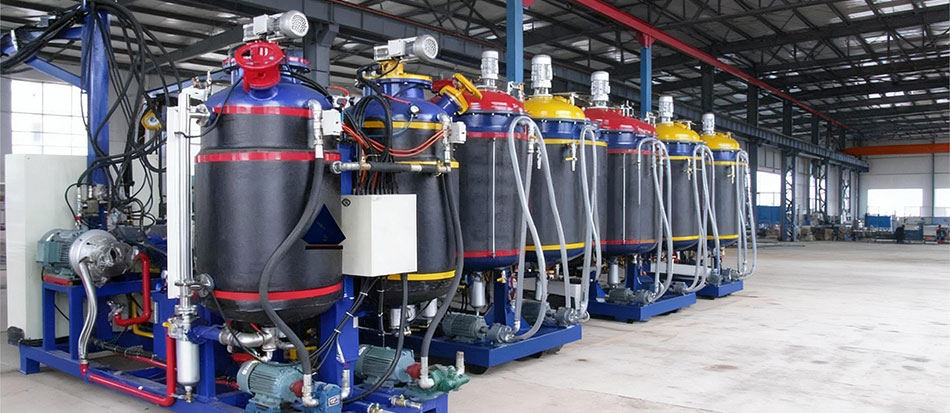
When you hear about the output capacity and efficiency of polyurethane foaming machines, it's crucial to define these terms precisely for your production planning. Capacity, for you, primarily refers to the maximum volume of foam a machine can produce within a given time, often measured in kilograms or liters per minute. It's the raw potential throughput of your equipment. Efficiency, however, is a more nuanced metric. It's not just about speed; it's about how well the machine converts raw materials (polyols and isocyanates) into finished, high-quality foam with minimal waste. For you, true efficiency encompasses material utilization rates, energy consumption per unit produced, and the consistency of the foam's cell structure and density. A highly efficient machine maximizes your yield from every kilogram of chemical, directly impacting your material costs and profitability. Understanding this distinction helps you look beyond just the biggest output number and evaluate which machine offers the best overall value and performance for your specific application.
1.1、Output Capacity: Throughput Volume and Cycle Time
When we talk about the output capacity of a polyurethane foaming machine, we are fundamentally discussing two intertwined parameters: throughput volume and cycle time. Throughput volume refers to the total amount of polyurethane foam (in weight or volume) the machine can produce within a specific timeframe, such as per hour or per shift. This is your machine's potential production ceiling.
Cycle time, on the other hand, is the heartbeat of your production line. It's the total time required to complete one full foaming operation cycle. This includes the metering and mixing of the polyol and isocyanate components, the injection or pouring of the mixture into the mold, the foaming and curing time inside the mold, and finally, the demolding of the finished part. A shorter cycle time directly translates to a higher throughput capacity.
You must analyze both metrics together. A machine might have a high theoretical throughput based on its chemical output rate (e.g., kilograms per minute), but if its cycle time is long due to slow curing or complex demolding, your actual production output will be bottlenecked. Therefore, evaluating capacity requires you to consider the entire process from raw material to finished part, not just the machine's pumping speed.
1.2、Operational Efficiency: Material Usage, Energy, and Uptime
Operational efficiency moves beyond raw speed to measure how intelligently your polyurethane foaming machine uses resources. It's the ratio of valuable output to total input, where inputs include raw materials, energy, and time. A machine with high operational efficiency maximizes the conversion of polyol and isocyanate into saleable foam while minimizing scrap, power consumption, and unplanned stops.
Material usage efficiency is paramount. You must examine the machine's mixing head precision and the stability of the metering system. Inefficient mixing or fluctuating ratios lead to off-spec foam that must be discarded, directly increasing your material costs per unit. Closed-loop systems that recirculate material maintain chemical temperature and viscosity, ensuring a consistent, high-quality mix that reduces waste from the very first shot.
Energy efficiency directly impacts your operating expenses. Modern machines utilize high-precision variable frequency drives (VFDs) for metering pumps and hydraulic systems. These drives supply only the power needed for the specific task, slashing energy consumption during both peak output and idle periods compared to older, constantly-running motors. Efficient temperature control systems for the chemical tanks also prevent excessive heating or cooling cycles.
Finally, machine uptime is the ultimate test of operational efficiency. This is determined by reliability and ease of maintenance. A machine that requires frequent, lengthy cleaning or suffers from component failures cripples your overall output capacity. Look for designs with self-cleaning mixing heads, accessible service points, and robust components that withstand continuous production cycles. High uptime means your theoretical capacity translates directly into real-world, on-schedule production.
1.3、The Direct Link Between Efficiency and Your ROI
When you analyze the efficiency of a polyurethane foaming machine, you are essentially measuring its direct impact on your Return on Investment (ROI). High efficiency isn't just an engineering spec; it's a financial driver. Every percentage point of improvement in material utilization, energy consumption, or cycle time translates directly into lower production costs and higher profit margins for your operation.
Consider material waste. An inefficient machine with poor mixing or imprecise metering can lead to significant over-pouring or off-spec foam that must be scrapped. This wasted raw material is a direct hit to your bottom line. A highly efficient machine minimizes this waste, ensuring you pay for chemicals that become sellable product, not landfill.
Furthermore, energy efficiency directly reduces your operational overhead. Modern, efficient machines are designed with optimized hydraulic systems, precise temperature control, and intelligent idle modes. This means they consume less electricity to produce the same or greater output, lowering your utility bills and improving your overall cost per unit.
Operational efficiency also reduces labor costs and increases asset utilization. A reliable, efficient machine with minimal unplanned downtime keeps your production line running. This maximizes the output from your capital investment, allows you to fulfill more orders, and reduces the need for costly overtime or secondary equipment to compensate for slow or unreliable primary machines.
2、Key Machine Factors That Drive High Output and Efficiency
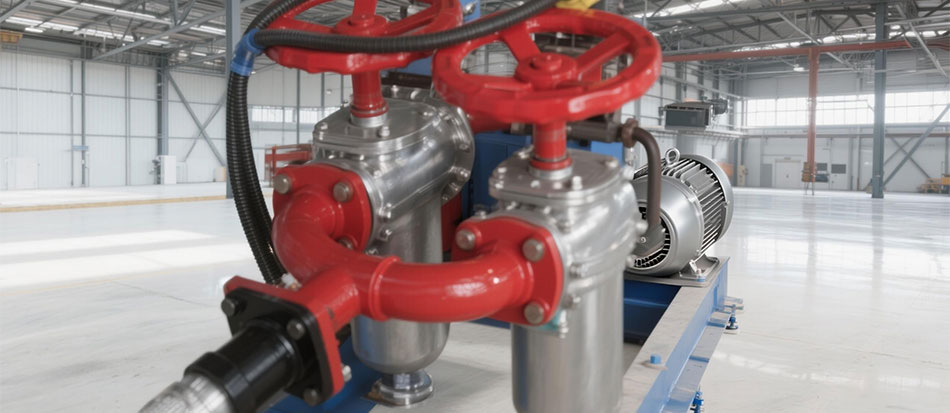
When you're aiming to maximize output capacity and efficiency, the machine itself is your starting point. Key factors like the precision of the metering system, the power and design of the mixing head, and the sophistication of the temperature control unit are non-negotiable. A high-precision metering pump ensures the exact chemical ratio, minimizing waste and guaranteeing consistent foam quality batch after batch. The mixing head's efficiency determines how quickly and homogeneously the components are combined, directly impacting cycle time. Advanced temperature control maintains optimal chemical viscosity, which is crucial for both reaction speed and final product properties. Investing in these core machine components is investing directly in your production throughput and material efficiency.
2.1、Precision Metering and Mixing Systems
When you examine a polyurethane foaming machine, the heart of its output capacity and efficiency lies in its precision metering and mixing system. This is where the raw polyol and isocyanate components are measured, combined, and homogenized before being dispensed. Any inconsistency here directly translates to material waste, poor foam quality, and production delays. A high-precision system ensures the exact chemical ratio is maintained shot after shot, which is fundamental for achieving consistent cell structure and physical properties in your final product.
You should look for systems equipped with high-accuracy gear pumps or piston metering units. These components are responsible for delivering the precise volume of each chemical required by the formulation. Advanced machines often feature closed-loop control with real-time feedback from flow meters, automatically adjusting pump speeds to correct any deviation instantly. This level of control minimizes off-ratio shots, which are a primary source of scrap and inefficiency.
The mixing head is equally critical. Its design determines how thoroughly and quickly the two reactive streams are combined. Laminar or inadequate mixing leads to unreacted patches and weak spots in the foam, compromising product integrity. Modern high-pressure impingement mixing heads create intense turbulence for perfect homogenization within milliseconds, ensuring a complete chemical reaction and uniform foam expansion every time.
Furthermore, the efficiency of the entire mixing circuit impacts your machine's cycle time and readiness. Look for features like automatic flushing and recirculation. A system that can quickly purge the mixing head between shots or during pauses prevents material curing inside the head, reducing downtime for cleaning and maintenance. This directly boosts your machine's effective output capacity by maximizing uptime.
Ultimately, investing in a machine with a superior precision metering and mixing system is not just about buying components; it's about securing predictable, high-quality output. It allows you to run at the upper limits of your machine's rated capacity without fear of costly errors, making it the foundational element for achieving both high output and true operational efficiency in your production line.
2.2、Advanced Temperature and Pressure Control
When you operate a polyurethane foaming machine, precise temperature control is non-negotiable. The chemical reaction between the polyol and isocyanate is highly temperature-sensitive. If your material temperatures are inconsistent or outside the optimal range, you will face issues like incomplete curing, poor cell structure, or inconsistent foam density. Advanced systems use high-accuracy sensors and fast-response heating elements to maintain your A and B component temperatures within a tight tolerance, typically ±1°C, ensuring a perfect reaction start every time.
Equally critical is the control of dispensing pressure. Your machine must deliver a consistent, high-pressure stream to achieve thorough mixing at the mixing head. Fluctuating pressure leads to an uneven mix ratio, causing soft spots, voids, or density variations in your final product. Modern machines employ servo-driven or precision hydraulic metering systems that provide rock-steady pressure, which translates directly to uniform foam quality and a significant reduction in material waste from defective parts.
The synergy between temperature and pressure defines your machine's process window. An advanced control system doesn't just manage these variables independently; it understands their relationship. For instance, if your material viscosity changes with temperature, the system can automatically adjust pressure to maintain the correct flow rate. This closed-loop control is what allows you to run at high speeds without sacrificing quality, maximizing both output capacity and material efficiency.
Ultimately, investing in a machine with sophisticated temperature and pressure control is an investment in predictability and scale. It minimizes your startup and cycle times, reduces your scrap rate, and ensures that every batch—from the first to the thousandth—meets your specifications. This level of control is what separates a basic foaming unit from a high-performance production asset that reliably drives your profitability.
2.3、Automation and Programmable Logic Controls (PLC)
Automation and Programmable Logic Controls (PLC) are the central nervous system of a modern, high-efficiency polyurethane foaming machine. They transform a complex chemical process into a repeatable, precise, and fast operation. When you invest in a machine with advanced PLC, you're not just buying hardware; you're acquiring the ability to lock in perfect recipes and eliminate human error from critical mixing and dispensing phases.
The PLC's primary role is to execute a pre-programmed sequence with exact timing. It coordinates the precise metering of polyol and isocyanate components, controls the injection of blowing agents and catalysts, and manages the high-pressure impingement mixing. This ensures every shot has the identical chemical ratio, which is fundamental for consistent foam density, cell structure, and final product properties. For you, this means dramatically reduced scrap rates and guaranteed product quality batch after batch.
Beyond basic sequence control, sophisticated PLC systems enable true process optimization. They integrate with sensors to monitor variables like material temperature, pressure, and flow rates in real-time. If a parameter drifts outside your set tolerances, the system can automatically adjust or halt the process, preventing costly off-spec production. This level of closed-loop control is what separates a merely automated machine from an intelligent, efficient one.
From an output capacity standpoint, PLC-driven automation minimizes cycle times. It enables rapid purging, fast changeovers between different formulations, and seamless integration with robotic arms or conveyor systems for part handling. The machine can operate at its maximum mechanical speed without being bottlenecked by operator pace. This allows you to achieve the theoretical output capacity of the machine consistently over long production runs.
Finally, a user-friendly Human-Machine Interface (HMI) connected to the PLC puts powerful control at your fingertips. Your operators can call up proven recipes with a touch, monitor the entire process visually, and access detailed production data and error logs. This not only boosts efficiency by simplifying operation but also aids in preventative maintenance and rapid troubleshooting, further maximizing machine uptime and overall equipment effectiveness (OEE).
3、How Material and Process Parameters Influence Performance
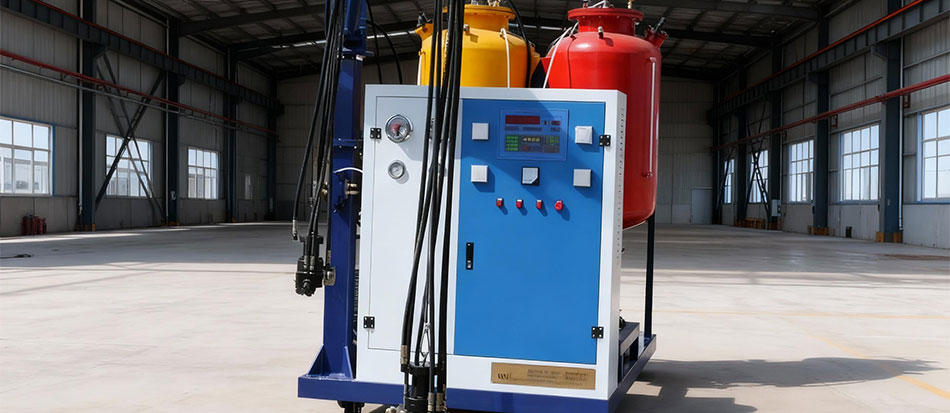
When you operate a polyurethane foaming machine, the raw materials and process settings you choose are not just inputs; they are the primary levers controlling both output capacity and efficiency. The chemical composition of your polyol and isocyanate, their temperature, and the mixing ratio directly determine the reaction speed and foam quality. If your material temperature is too low, the reaction slows down, reducing your machine's potential output per hour. Conversely, improperly balanced components can lead to wasted material through poor curing or defective products, crippling your overall efficiency.
Process parameters like the metering pump's precision, the mixing head pressure, and the conveyor speed (for continuous machines) must be finely tuned to your specific formulation. You need a machine that can maintain a consistent and accurate ratio, as even minor deviations can cause significant material waste and rework. Furthermore, the ability to quickly adjust these parameters for different products allows you to maximize machine utilization and capacity across various production runs, turning flexibility into a key driver of efficiency.
3.1、Formulation Consistency and Reactivity
Formulation consistency is the bedrock of predictable output capacity. When your polyol and isocyanate components maintain strict chemical and physical properties batch after batch, your foaming machine can operate at its designed throughput without constant manual adjustments. Inconsistencies in viscosity, water content, or catalyst levels force the system to compensate, often by slowing down the mixing and dispensing process to avoid defects, directly capping your maximum output.
Reactivity—the speed at which the mixture gels and cures—is a direct lever on cycle time. A faster-reacting formulation allows you to demold parts quicker, increasing the number of cycles per hour. However, you must match this reactivity to your machine's capabilities. An overly fast system can overwhelm the mixing head, leading to poor cell structure and wasted material, negating any efficiency gains from the shorter cycle.
You control efficiency through formulation precision. An optimized, consistent recipe minimizes the margin of error required in metering. This reduces material over-purging and scrap rates. Even a small percentage reduction in waste compounds into significant savings at high output volumes. Furthermore, a stable formulation ensures consistent foam density and physical properties, reducing quality control rejects and rework.
The interplay between your material and machine is critical. A high-output machine requires a formulation with a suitably long cream time and open time to fill large or complex molds completely before rising. Pushing a fast, low-viscosity formula through a high-pressure impingement mixer maximizes mixing efficiency and laminate quality, enabling you to achieve both high speed and superior product performance.
3.2、Mold Design and Clamping Force
Mold design directly dictates the filling pattern and foam expansion within the cavity. A well-designed mold ensures uniform material flow, minimizes air entrapment, and facilitates proper venting of reaction gases. For you, this translates to consistent part density, superior surface finish, and a significant reduction in scrap rates due to incomplete fills or voids. Complex geometries require careful consideration of gate placement and flow channels to prevent preferential flow paths that lead to density variations.
Clamping force is the critical counter-pressure that contains the foaming reaction. If your machine's clamping force is insufficient for the projected mold area and internal foaming pressure, the mold will 'flash'—material will leak out at the parting line. This not only creates wasteful, messy cleanup but also results in under-filled parts with compromised structural integrity. You must select a machine whose clamping force rating exceeds the peak internal pressure generated by your specific polyurethane system and part size.
The synergy between mold design and clamping force is where efficiency is won or lost. A robust, well-sealed mold allows you to utilize the machine's full output capacity without interruptions for cleaning flash. Conversely, a weak clamping system forces you to operate at lower pressure or injection speeds to avoid flash, throttling your potential output. For high-efficiency production, your mold and machine must be engineered as a matched system to handle the intended process parameters reliably.
Optimizing this relationship involves calculating the necessary clamping force based on the maximum injection pressure and the cavity's projected area. Furthermore, modern machines with proportional hydraulic systems allow for precise control of clamping force during the cycle, which can improve seal life and energy efficiency. By ensuring your mold design and machine clamping force are perfectly aligned, you secure both the high output capacity and the material/energy efficiency that define a profitable production line.
3.3、Optimizing the Pouring and Curing Cycle
Optimizing the pouring and curing cycle is where you directly control the speed and quality of your production line. The pouring phase involves the precise deposition of the mixed polyurethane components into the mold. Your goal here is to achieve complete mold filling without creating voids or excessive internal pressure. This requires fine-tuning parameters like the pour head's movement speed, trajectory, and the flow rate of the chemical mix. A slow, steady pour often yields better cavity penetration than a rapid, turbulent one, especially for complex geometries.
The transition from pouring to curing is critical. The curing cycle begins the moment the chemical reaction starts. You must manage the gel time and tack-free time to match your demolding schedule. If the gel time is too short, the material may not flow completely before solidifying, leading to defects. If it's too long, your cycle time increases, reducing overall output capacity. By working with your material supplier and adjusting catalyst levels, you can find the optimal cure profile that allows for fast demolding while ensuring the part has sufficient dimensional stability.
Temperature control is the master variable for curing efficiency. Both the mold temperature and the ambient temperature of your production area significantly influence reaction kinetics. A consistently heated mold accelerates the cure, allowing you to reduce cycle times. However, excessive heat can cause issues like scorching or uneven curing. Implementing a closed-loop temperature control system for your molds ensures repeatability and prevents quality fluctuations, directly boosting both efficiency and output.
Finally, consider the entire cycle holistically. The time from mold close, pour, cure, to demold and mold preparation for the next cycle defines your machine's ultimate output capacity. Automation plays a key role here. Automated mold handling, robotic pour heads, and integrated release agent application systems can drastically reduce idle time between cycles. By synchronizing these steps and minimizing manual intervention, you compress the total cycle time, pushing your machine's efficiency to its theoretical maximum.
4、Strategies to Maximize Your Machine's Output and Efficiency
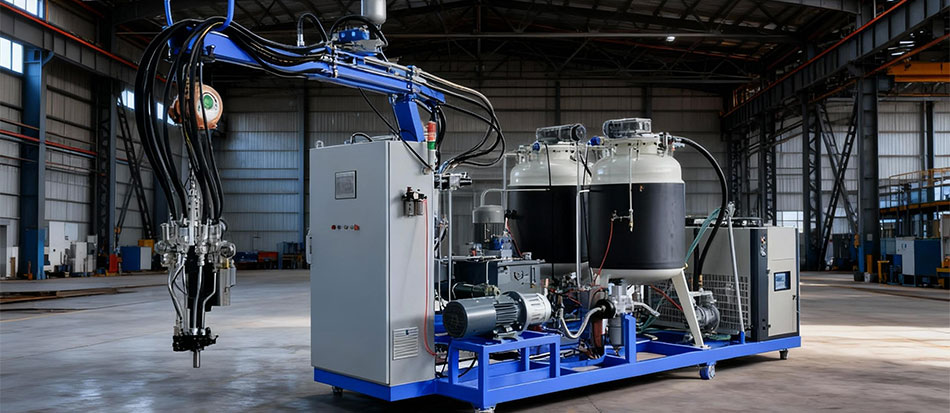
To maximize your machine's output and efficiency, a proactive and systematic approach is essential. First, you must ensure your raw materials are precisely conditioned and stored according to the manufacturer's specifications, as inconsistent material temperature or moisture can drastically reduce reaction speed and foam quality. Second, implement a rigorous and regular preventive maintenance schedule. This includes cleaning mixing heads, calibrating metering units, and checking all seals and hoses to prevent unplanned downtime that cripples your overall capacity.
Third, invest time in training your operators thoroughly. A skilled operator who understands the interplay between temperature, pressure, and mix ratios can fine-tune the process in real-time, minimizing waste and maximizing throughput. Fourth, consider integrating process monitoring and data logging systems. These tools allow you to track key performance indicators, identify inefficiencies, and make data-driven adjustments to your production recipes and cycles.
Finally, don't overlook the importance of workflow optimization around the machine. Streamlining material handling, mold preparation, and post-curing processes ensures that your high-capacity foaming machine is never waiting, thus fully utilizing its potential. By combining these strategies, you transform your equipment from a mere production tool into a reliable, high-performance asset that consistently delivers on its promised output and efficiency.
4.1、Implementing Predictive and Preventive Maintenance
Predictive and preventive maintenance is not merely about fixing what's broken; it's a strategic approach to preemptively identify and address potential failures before they disrupt your production line. For you, this means shifting from a reactive mindset to a proactive one. By analyzing data from your polyurethane foaming machine's sensors—such as temperature fluctuations, pressure inconsistencies, or unusual motor vibrations—you can schedule maintenance based on actual equipment condition rather than a fixed calendar. This prevents unexpected downtime that directly cripples your output capacity.
Your maintenance strategy should include regular, scheduled checks of critical components like the mixing head, metering pumps, heating systems, and hydraulic units. For instance, proactively cleaning the mixing chamber prevents cross-contamination and ensures consistent chemical mixing ratios, which is fundamental for both product quality and material efficiency. Replacing worn seals or filters before they fail avoids costly leaks and material waste, preserving the machine's overall operational efficiency.
Furthermore, maintaining detailed logs of all maintenance activities, parts replacements, and performance metrics creates a valuable historical database. This data allows you to identify patterns, predict the lifespan of consumable parts, and optimize your spare parts inventory. For you, this translates into better planning, reduced emergency repair costs, and maximized machine availability, ensuring that your foaming machine operates at its designed output capacity consistently and efficiently over its entire lifecycle.
4.2、Integrating with Conveyor and Handling Systems
Integrating your polyurethane foaming machine with automated conveyor and handling systems is a transformative strategy to unlock its full output capacity. When the machine operates in isolation, you face bottlenecks in loading raw materials and unloading finished parts. A synchronized conveyor system eliminates these manual handling delays, creating a continuous, high-volume production flow that matches the machine's inherent speed.
You must consider the synchronization between the foaming cycle and the conveyor speed. The conveyor should index parts into the mixing head's pour zone with precise timing, hold them stationary for the required cure time, and then move them to a post-cure or cooling zone. This precise orchestration ensures every part receives the correct material dosage and dwell time, directly impacting both output consistency and product quality.
The choice of handling system—whether belt conveyors, chain-driven pallets, or rotary indexing tables—depends on your product's size, weight, and required demold time. For complex or heavy parts, robotic arms for mold placement and part extraction can be integrated. This not only boosts efficiency but also enhances worker safety by removing them from repetitive, strenuous tasks near the chemical mixing point.
Ultimately, this integration turns your foaming machine from a standalone unit into the heart of a streamlined production cell. The result is a significant reduction in cycle time per part, a dramatic increase in daily output capacity, and a more predictable, efficient use of both labor and machine resources.
4.3、Training Operators for Optimal Performance
Your machine's output capacity and efficiency are not solely determined by its hardware; they are profoundly influenced by the skill and knowledge of the operators who run it. Even the most advanced polyurethane foaming machine will underperform if operated incorrectly. Therefore, investing in comprehensive operator training is a direct investment in maximizing your return on equipment.
Effective training begins with a deep understanding of the chemical process. Operators must know how variations in the isocyanate and polyol ratio, temperature, and catalyst levels affect foam density, rise time, and final cure. This knowledge allows them to make precise adjustments on the fly to maintain quality and prevent costly waste from off-spec production.
Hands-on training on machine control systems is non-negotiable. Operators should be proficient in setting and monitoring parameters like mix head pressure, component temperatures, and shot timers. They must be trained to recognize early warning signs of mechanical issues, such as pressure fluctuations or irregular mixing sounds, enabling proactive maintenance that prevents unplanned downtime.
Furthermore, training must emphasize safety and procedural discipline. Proper handling of raw materials, understanding machine safety interlocks, and following standardized startup, shutdown, and cleaning protocols are critical. A disciplined operator ensures not only a safe working environment but also consistent machine performance and product quality batch after batch.
Finally, consider implementing a continuous learning program. As your processes evolve or new materials are introduced, refresher courses and advanced training sessions will keep your team's skills sharp. Empowering your operators to become experts transforms them from mere machine minders into active contributors to your production efficiency and output goals.
4.4、Utilizing Data Analytics for Continuous Improvement
Data analytics transforms your polyurethane foaming machine from a static piece of equipment into a dynamic, learning asset. By systematically collecting and analyzing operational data, you move from reactive maintenance and guesswork to proactive optimization and precise forecasting. This is the cornerstone of true continuous improvement, allowing you to incrementally but consistently enhance both output capacity and efficiency.
You should start by instrumenting your machine to capture key metrics in real-time. This includes material consumption rates (Component A and B), temperature profiles across the mixing head and mold, pressure readings, shot cycle times, and machine energy draw. Modern machines with IoT-enabled PLCs make this data collection seamless. The goal is to establish a digital twin of your production process, creating a baseline against which all improvements are measured.
With this data stream, you can employ analytical tools to identify patterns and correlations that are invisible to the naked eye. For instance, you might discover that a slight deviation in material temperature, still within the "acceptable" manual range, correlates with a 5% increase in foam density variation. By tightening the control loop based on this insight, you directly improve product consistency and reduce material waste, thereby boosting efficiency.
Predictive maintenance is another powerful application. Instead of following a fixed calendar schedule or waiting for a breakdown, analytics can predict component failure. By analyzing trends in motor current, hydraulic pressure fluctuations, or seal wear indicators, the system can alert you to perform maintenance just before a failure is likely to occur. This minimizes unplanned downtime, maximizing the machine's available production capacity.
Finally, you must close the loop by feeding these insights back into your operational procedures and machine settings. Create a culture where data-driven decisions replace intuition. Regularly review performance dashboards with your team, set targets for key performance indicators (KPIs) like Overall Equipment Effectiveness (OEE), and run controlled experiments to test new parameters suggested by your analysis. This iterative cycle of measure, analyze, adjust, and validate is the engine of continuous improvement, ensuring your foaming machine operates ever closer to its theoretical maximum capacity and efficiency.
Ultimately, mastering the output capacity and efficiency of your polyurethane foaming machine is an ongoing journey, not a one-time setup. It requires a holistic view that connects machine specifications with your specific material formulations, product designs, and operational goals. The most successful operations are those that continuously monitor and fine-tune this relationship.
Remember, the most expensive machine isn't always the most efficient for your needs. By focusing on the key parameters discussed—like shot control, mixing quality, and system integration—you can identify equipment that delivers reliable, high-quality output without unnecessary complexity or cost. This strategic approach ensures your production line remains competitive and adaptable.
We hope this exploration empowers you to ask the right questions and seek solutions that truly enhance your production throughput and resource utilization. Investing time in understanding these core principles is an investment in the future resilience and growth of your manufacturing business.