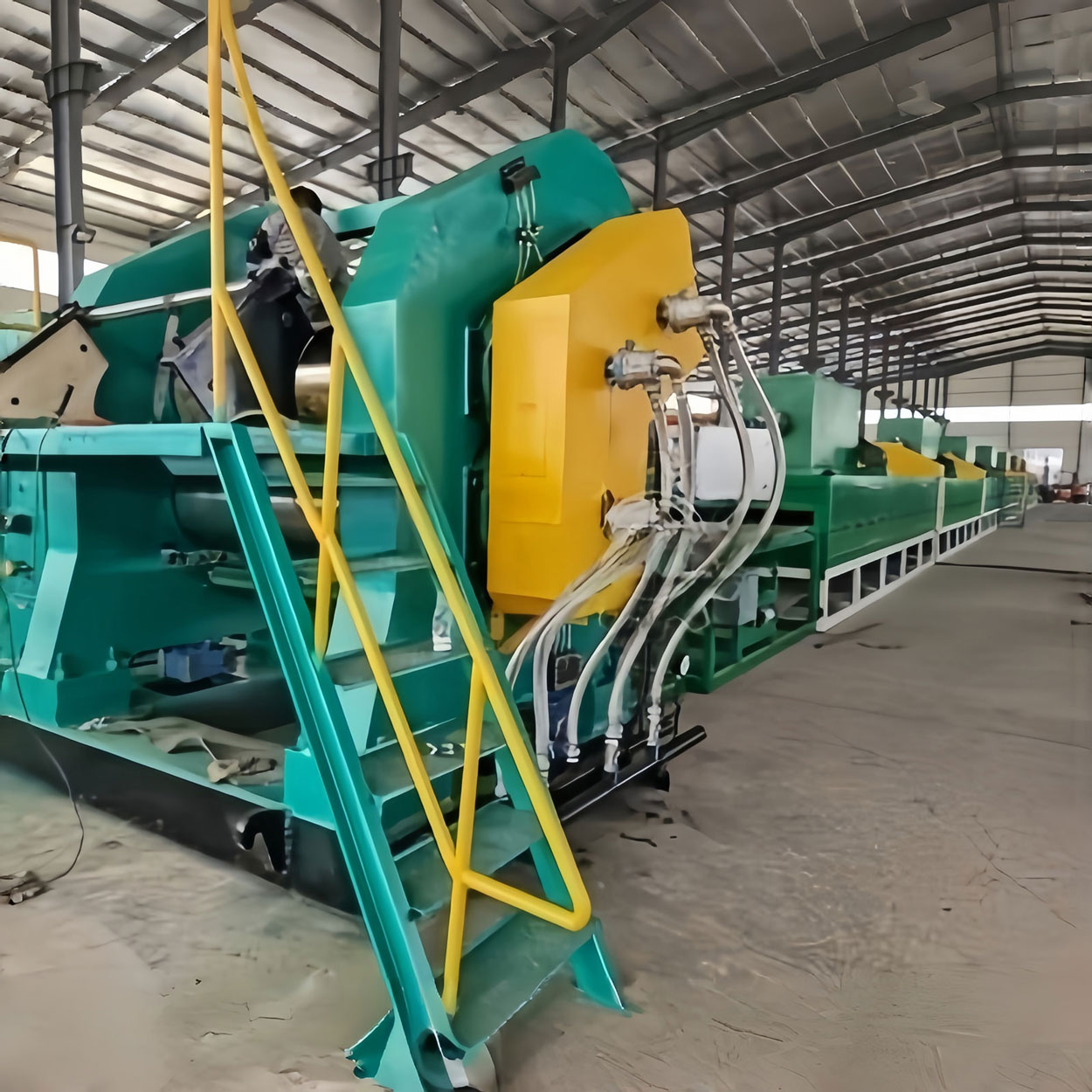
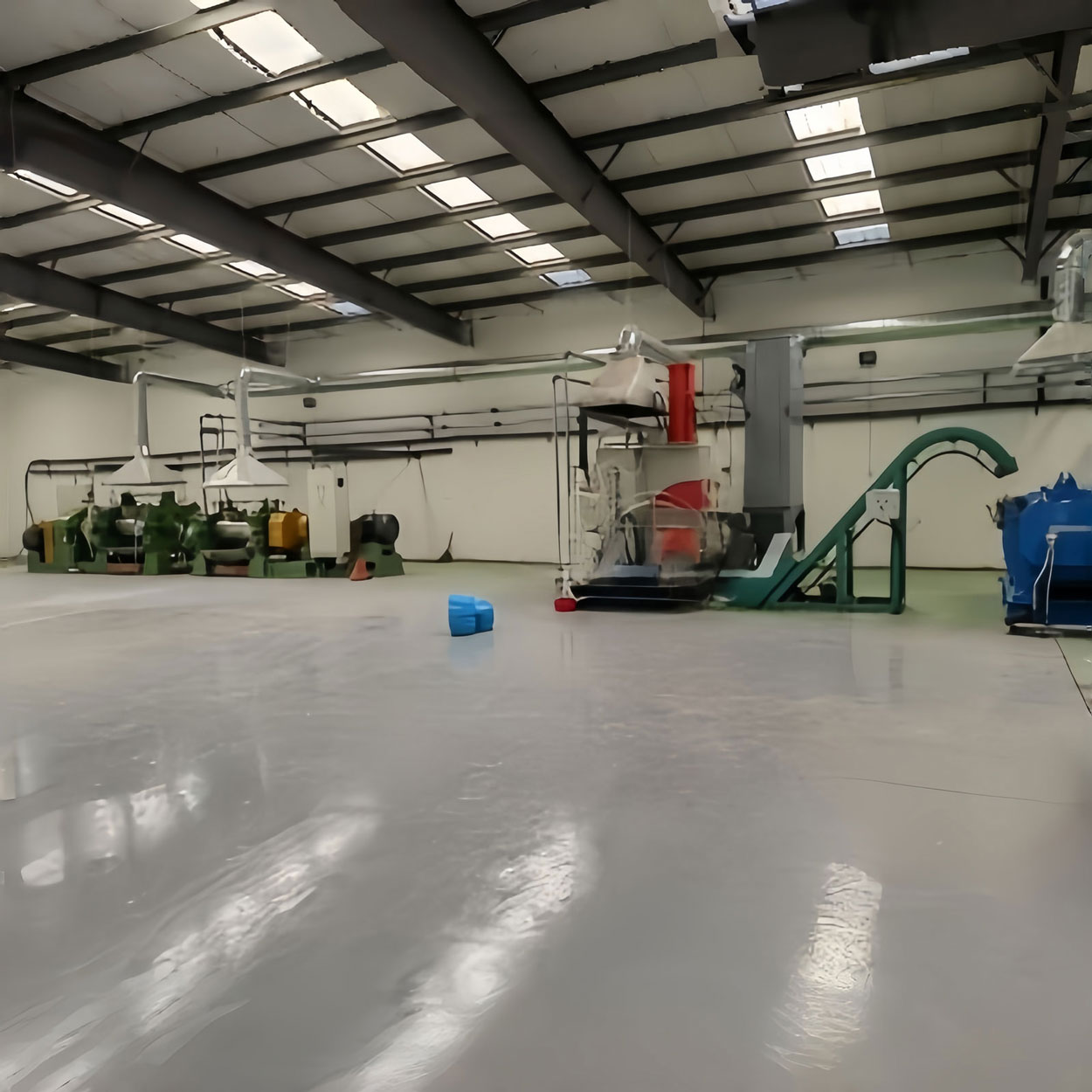
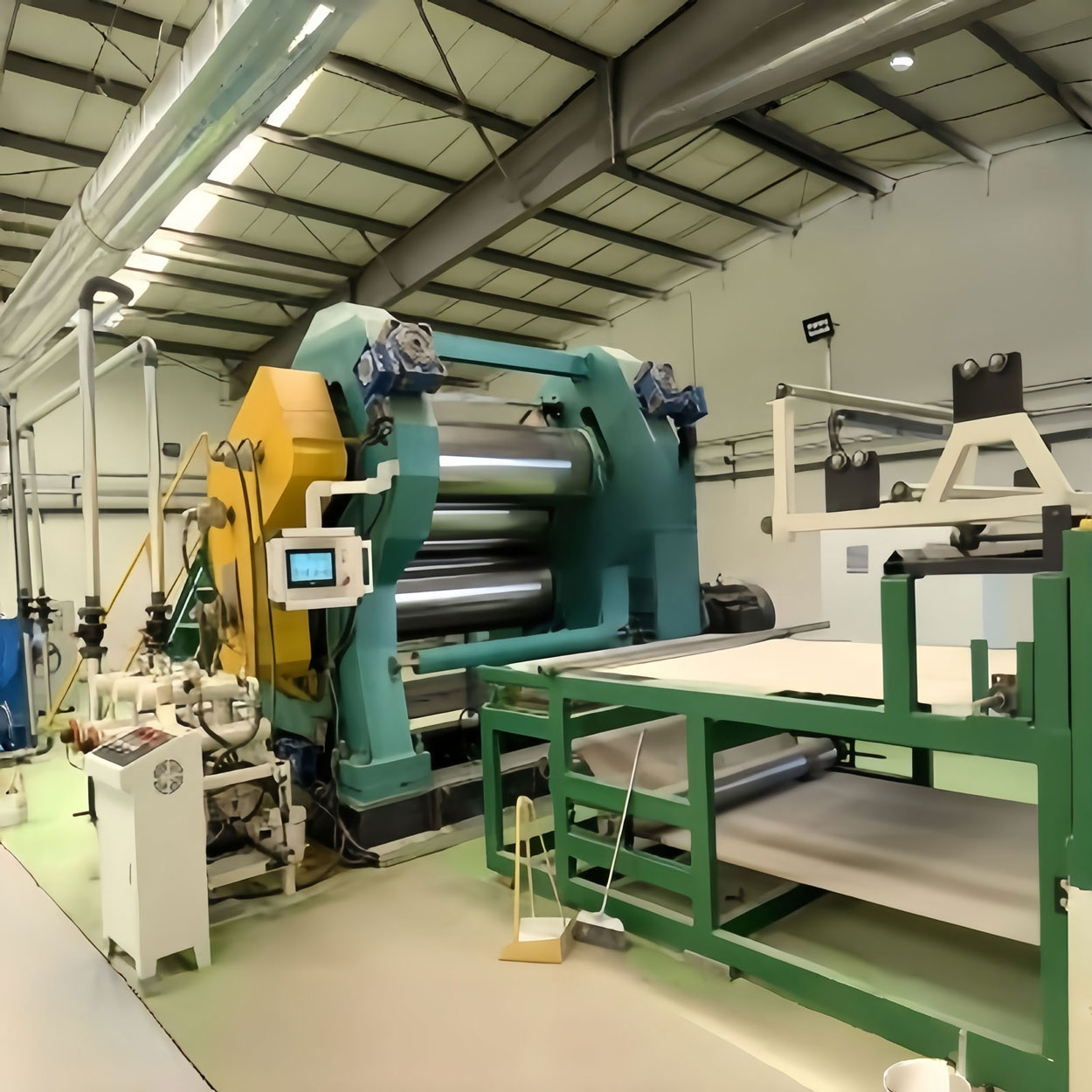
Rubber Waterstop Production Line
I. Product Description
The rubber waterstop production line is a continuous or semi-continuous production line specifically used for manufacturing waterstop products primarily made from rubber. It covers core process stages such as ingredient mixing and compounding, extrusion/calendering forming, vulcanization (cross-linking), cooling, cutting, inspection, and packaging. Relying on characteristics like high elasticity, excellent water pressure resistance, aging resistance, tear resistance, and good bonding with concrete, rubber waterstops are widely used in various waterproofing projects and are key sealing components for preventing structural leakage. Purpose: Used to produce rubber waterstops, which are critical sealing and waterproofing materials in various civil engineering, hydraulic engineering, underground engineering, tunnels, bridges, subways, etc. Their main function is to prevent the penetration of groundwater, rainwater, construction water, etc., ensuring the waterproof performance and long-term stability of the engineering structure.
Typical products include:
Embedded Rubber Waterstop: Embedded within concrete structures, used for waterproofing at structural joints in underground engineering, tunnels, subways, etc.
Back-adhered (External) Rubber Waterstop: Adhered to the exterior of concrete structures, used for external waterproofing at construction joints, deformation joints, etc.
Steel-edged Rubber Waterstop: Composite waterstop with steel edges, enhancing structural strength and deformation resistance, used in high water pressure, large deformation projects.
Water-swelling Rubber Waterstop: Contains a water-swelling rubber layer that expands upon contact with water to further enhance the waterproofing effect.
Core Advantages: High elasticity, water pressure resistance, aging resistance, tear resistance, reliable waterproofing, strong bond with concrete.
II. Equipment Advantages (Core Selling Points)
Specially designed for rubber waterstops: Adapts to the special structures (e.g., embedded, back-adhered, steel-edged, swelling type) and dimensional requirements of waterstops.
Advanced vulcanization process: Utilizes platen vulcanizing presses, drum vulcanizers, or continuous vulcanization lines to ensure thorough cross-linking of the waterstop, excellent elasticity and strength.
Strong structural adaptability: Supports various cross-sectional shapes (e.g., flat plate, corrugated, toothed, with steel edge, etc.), meeting different engineering needs.
Wide material compatibility: Suitable for high-performance rubbers like NR (Natural Rubber), EPDM (Ethylene Propylene Diene Monomer), NBR (Nitrile Rubber), CR (Chloroprene Rubber).
High degree of automation: Supports automatic temperature control, continuous extrusion/calendering, automatic cutting, online inspection, improving production efficiency and quality consistency.
Durability and reliability: Stable equipment operation, long mold life, suitable for large-scale industrial production.
Provides turnkey service: Equipment + Rubber Formulation + Waterstop Structure Design + Process Technology + After-sales Support.
Customizable: Product width, thickness, shape, vulcanization process, with/without steel edge, etc., can be customized as required.
III. Technical Parameter Table
The following are the main technical parameters of a typical rubber waterstop production line.
| Item | Parameter / Description | Unit | Typical Value / Range |
| Product Type | - | - | Rubber Waterstop (Embedded/Back-adhered/Steel-edged/Swelling type, etc.) |
| Production Line Type | - | - | Continuous/Semi-continuous Vulcanization Line (Platen/Drum/Extrusion Vulcanization) |
| Product Width | - | mm | 100 ~ 500 (Common 200~350) |
| Product Thickness | - | mm | 6 ~ 20 (Common 8~15) |
| Vulcanization Method | - | - | Platen Vulcanization / Drum Vulcanization / Continuous Vulcanization |
| Vulcanization Temperature | - | ℃ | 140 ~ 180 |
| Production Line Speed | - | m/min | 1 ~ 8 |
| Total Power | Whole Line | kW | 100 ~ 300 |
| Control Method | - | - | PLC Automatic / Semi-automatic / Manual |
IV. Formulation Table (Common Materials for Rubber Waterstop)
The following are common rubber and additive systems for rubber waterstops.
| Rubber Type | Common Material | Function & Characteristics |
| NR (Natural Rubber) | - | High elasticity, soft, used for general waterstops, low cost |
| EPDM (EPDM Rubber) | - | Aging resistance, ozone resistance, weather resistance, suitable for outdoor, long-term waterproofing projects |
| NBR (Nitrile Rubber) | - | Oil resistance, solvent resistance, used for waterstops in special oily environments |
| CR (Chloroprene Rubber) | - | Oil resistance, weather resistance, aging resistance, excellent comprehensive performance |
| Water-swelling Rubber | - | Volume expands upon contact with water, enhances waterproofing effect, often compounded on the surface or inside the waterstop |
V. Equipment List (Main Components)
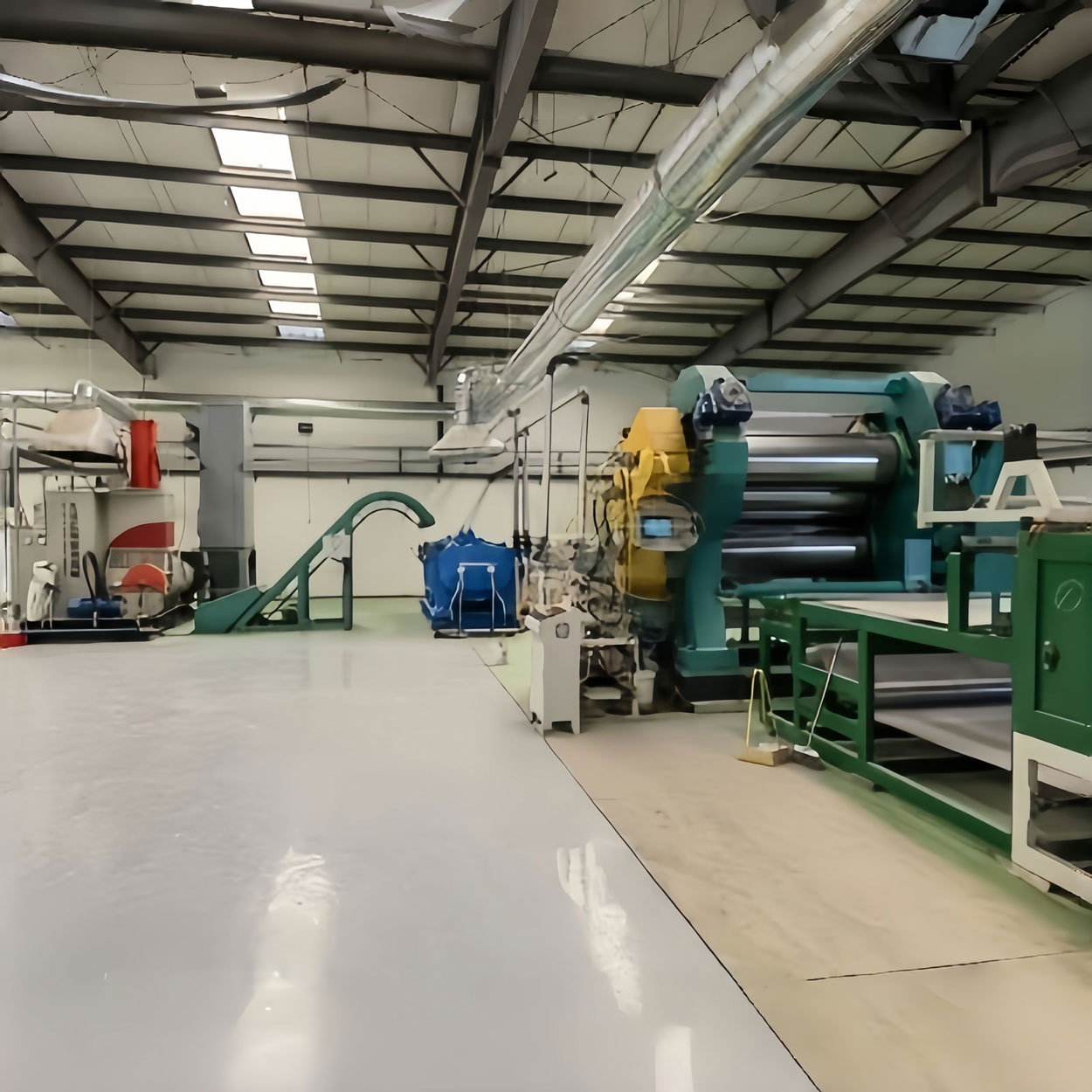
1. Mixer (Internal Mixer / Open Mill) -- Mixing rubber and additives
2. Extruder / Calender -- Processing the mixed compound into sheets or specific cross-sectional shapes
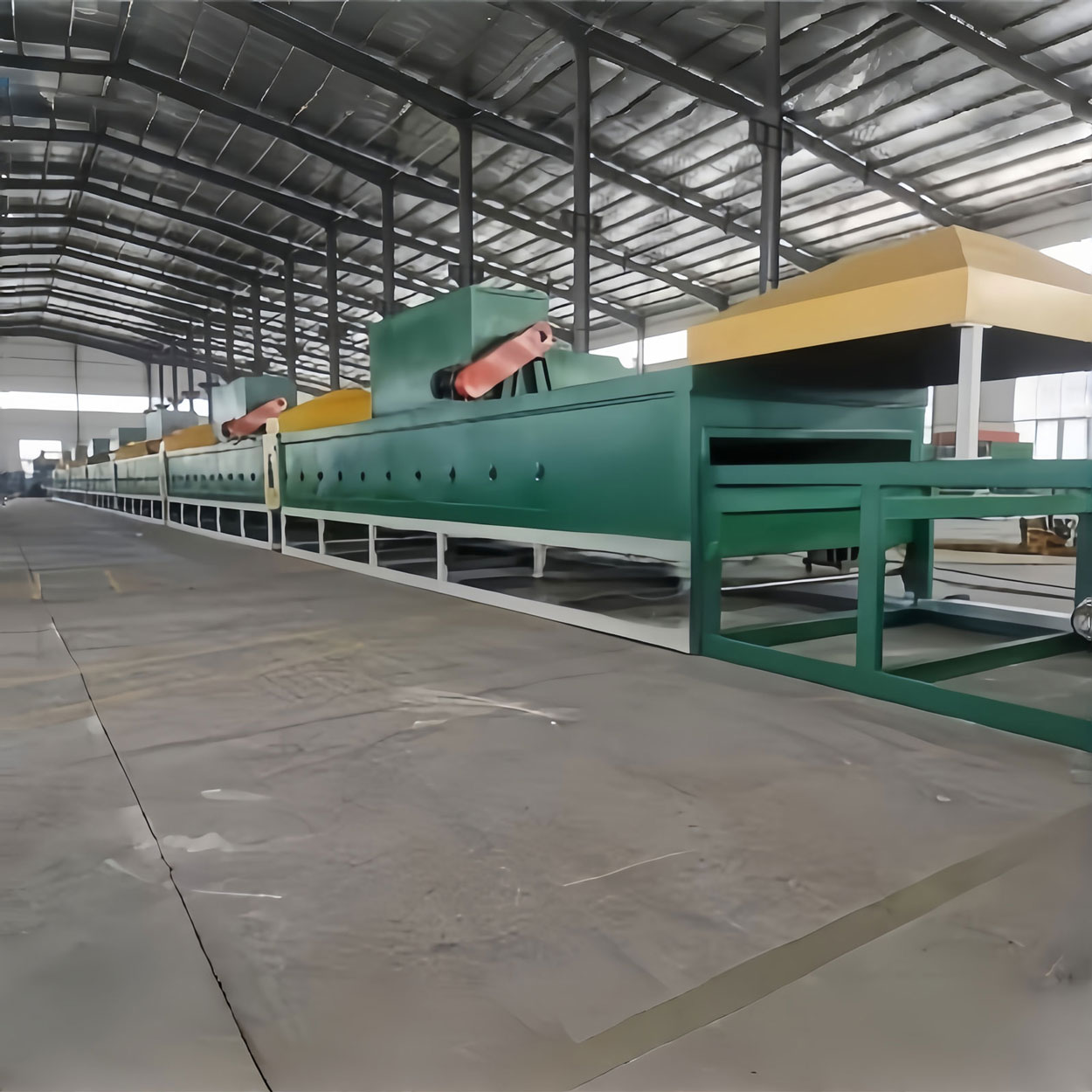
3. Vulcanizing Equipment (Platen Vulcanizing Press / Drum Vulcanizer / Continuous Vulcanization Line) -- Achieving cross-linking and shaping of the waterstop
4. Steel Edge Compounding Device (Optional) -- For steel-edged rubber waterstops, combining steel strip with rubber
5. Cooling Device (Water Cooling / Air Cooling) -- Rapid cooling and setting
6. Cutting Equipment (Die Cutting / Rotary Cutter) -- Cutting the waterstop to set lengths
7. Haul-off / Winding / Stacking Equipment -- Continuous haul-off or post-cutting arrangement
8. Inspection / Packaging Equipment -- Checking appearance, dimensions, hardness, then packaging
9. Control System (PLC / Touch Screen) -- Controlling various process parameters
VI. Process Flow Chart (Brief Description)
The typical process flow for rubber waterstop is as follows:
Ingredient Mixing: Mix rubber (e.g., NR/EPDM/NBR/CR) with vulcanizing agents, anti-aging agents, softeners, reinforcing agents, pigments, etc., according to the formulation ratio uniformly in an internal mixer/open mill.
Forming Processing:
Extrusion/Calendering Forming: Process the mixed compound into specific width, thickness, and cross-sectional shape (e.g., flat plate, corrugated, toothed, etc.) through an extruder or calender.
Steel Edge Compounding (Optional): Press the steel strip and rubber layer together through a compounding device to form a steel-edged rubber waterstop.
Vulcanization (Cross-linking): Heat and pressurize in a platen vulcanizing press, drum vulcanizer, or continuous vulcanization line to cross-link the rubber molecules, obtaining excellent elasticity, strength, and dimensional stability.
Cooling and Setting: Rapidly cool the waterstop through water cooling or air cooling to fix the structure and dimensions.
Cutting / Arrangement: Cut into finished products according to the required length for the project, or continuously wind and then slit according to specifications.
Inspection / Packaging: Check appearance, dimensions, hardness, cross-section structure, then package and store.
VII. Application Fields
Hydraulic Engineering: Waterproofing joints in dams, reservoirs, channels, sluices, etc.
Construction Engineering: Waterproofing structural joints, construction joints in basements, pools, swimming pools, subway stations, tunnels, bridges, etc.
Subways and Tunnels: Waterproofing deformation joints, construction joints, around penetrating pipes in underground structures.
Bridges: Waterproofing structures at bridge abutments, expansion joints, bridge deck joints, etc.
Industrial and Civil Buildings: Waterproofing nodes in elevator shafts, pipe shafts, roofs, exterior walls, etc.
VIII. Energy Saving, Emission Reduction, Cost Reduction, Efficiency Increase
The electrical control cabinets and motor systems procured by APEX achieve comprehensive electricity savings of 5%-60% through integrated technologies such as variable frequency speed regulation, intelligent control, and efficient hardware design. The core energy-saving mechanisms are as follows:
1. Variable Frequency Speed Regulation Technology: Dynamically matches load demand (Energy Saving Contribution Rate: 10%-35%)
2. Intelligent Control System: Optimizes energy efficiency from multiple dimensions (Energy Saving Contribution Rate: 5%-15%)
3. Efficient Hardware Design: Reduces basic losses (Energy Saving Contribution Rate: 3%-10%)
IX. About Us
Headquarters: Shandong, China, established in 2014
Market: Domestic 35%, North America 9%, South Asia/South America/Eastern Europe/Middle East each account for 7%~5%
Scale: 3 branch factories, 2 major industrial parks, 100+ employees, 10+ years of professional experience
Service: Quality first, turnkey projects, full-process technical support