
Difference Between High Pressure and Low Pressure Foaming Machines: A Complete Guide for Your Project
Difference Between High Pressure and Low Pressure Foaming Machines is a fundamental question when you're planning a polyurethane foam application. Choosing the wrong type can affect your product quality, production efficiency, and overall costs. This guide will walk you through the key distinctions to help you make an informed decision.
You might be wondering which technology is better suited for your specific needs, whether it's for insulation, cushioning, or automotive parts. The answer isn't always straightforward, as each system has its own strengths and ideal applications. We'll break down the complexities into simple, actionable insights.
By understanding the core differences in mixing principle, output quality, and operational demands, you can align your equipment choice with your production goals and budget. Let's dive into the details that separate these two pivotal technologies in the foaming industry.
1、Core Working Principle and Mixing Mechanism
1.1、High Pressure: Impingement Mixing at its Heart
1.2、Low Pressure: Mechanical Stirring for Simplicity
1.3、Why the Mixing Method Matters for Your Foam
2、Output Quality and Foam Characteristics
2.1、Cell Structure and Density Consistency
2.2、Mixing Ratio Accuracy and Final Product Integrity
2.3、Suitability for Different Applications
3、Operational and Economic Considerations
3.1、Initial Investment and Maintenance Costs
3.2、Production Speed and Efficiency
3.3、Material Wastage and Clean-Up Process
4、Choosing the Right Machine for Your Needs
4.1、When to Choose a High-Pressure Foaming Machine
4.2、When a Low-Pressure Machine is the Ideal Fit
4.3、Key Questions to Ask Before You Decide
1、Core Working Principle and Mixing Mechanism
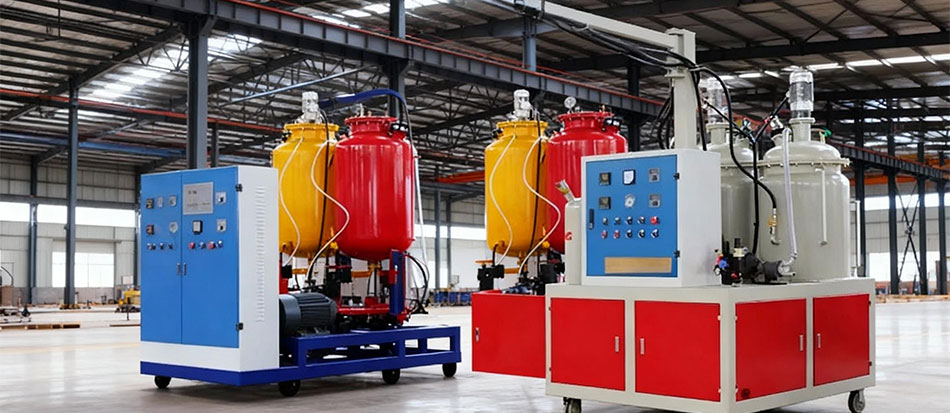
At the heart of the difference between high pressure and low pressure foaming machines lies their core working principle and mixing mechanism. Imagine you need to combine two liquid components, polyol and isocyanate, to create foam. In a high-pressure machine, you use powerful pumps to inject these components at very high pressures (typically 100-200 bar) into a small, sealed mixing chamber. Here, they collide with immense force, creating a turbulent, self-cleaning mix that is then injected into your mold. This high-energy impingement mixing ensures a highly homogeneous and consistent chemical blend every time.
In contrast, a low-pressure foaming machine operates on a simpler principle. The two components are metered at much lower pressures (usually 5-30 bar) and brought together in a static mixer—a tube with internal helical elements. As the liquids flow through this mixer, the elements divide and recombine the streams to achieve blending. This method is gentler but relies on the mechanical design of the static mixer and requires periodic cleaning to prevent clogging from cured material. Your choice here fundamentally dictates the precision, consistency, and maintenance routine of your production process.
1.1、High Pressure: Impingement Mixing at its Heart
At the core of a high-pressure foaming machine lies the principle of impingement mixing. This is where the magic happens. You have two precisely metered streams of liquid components—typically polyol and isocyanate—that are pressurized to extremely high levels, often between 100 and 200 bar. These high-pressure streams are then forced through specially designed nozzles and directed to collide, or impinge, against each other at a specific point inside the mixing head.
The sheer kinetic energy of this collision is what creates a near-perfect, homogeneous mixture almost instantaneously. There are no mechanical stirrers or moving parts inside the mixing chamber to wear out or cause inconsistent blending. The mixing quality is exceptionally high and repeatable, which is crucial for producing foam with consistent cell structure, density, and physical properties batch after batch.
Because the mixing is so efficient and happens in a flash, the mixing head can be self-cleaning. After each shot, a piston or a valve mechanism purges the remaining mixture, ensuring no material cures inside the head. This design minimizes downtime for cleaning and prevents cross-contamination between cycles, making it ideal for high-volume, automated production lines where speed and consistency are paramount.
1.2、Low Pressure: Mechanical Stirring for Simplicity
In a low-pressure foaming machine, you rely on a fundamentally different mixing principle. Instead of high-velocity impingement, the system uses a mechanical stirring mechanism, typically a motor-driven mixer or agitator housed within a mixing head. Here, the liquid polyol and isocyanate components are metered by gear pumps at relatively low pressures (usually below 20 bar) and fed into this common mixing chamber.
The key action for you to understand is mechanical blending. The rotating stirrer physically shears and mixes the two components together. This process is less violent than high-pressure impingement, resulting in a more turbulent but less homogenized mix compared to its high-pressure counterpart. The quality of the final foam is directly tied to the efficiency and speed of this mechanical stirrer.
This simplicity in design translates directly to your operational reality. The system is generally easier to maintain because the mixing head can be disassembled and cleaned manually between shots or during material changes. There's no need for the ultra-high precision nozzles and the stringent filtration requirements of high-pressure systems, which can be a significant advantage if your production runs involve frequent material switches or color changes.
However, you must be aware of the trade-offs. The mechanical mixing is less efficient at initiating the chemical reaction instantly and uniformly across the entire material stream. This can sometimes lead to a slightly less consistent cell structure in the final foam product, with a potential for more air entrapment or uneven density if the mixing is not perfectly calibrated for your specific material formulation.
1.3、Why the Mixing Method Matters for Your Foam
The mixing method is the heart of your foaming process, directly dictating the fundamental quality of your final product. It determines how completely and uniformly the polyol and isocyanate components combine before they begin to react and expand. An incomplete or uneven mix leads to inconsistent cell structure, weak spots, and poor physical properties throughout the foam block or molded part.
With high-pressure impingement mixing, the force of the collision at the mixing head creates a turbulent, intimate blend of the two liquid streams. This ensures that every molecule of one component has a high probability of encountering its counterpart, initiating a more uniform and simultaneous reaction. For you, this translates to foam with superior structural integrity, consistent density, and optimal thermal or mechanical performance across the entire product.
In contrast, the mechanical stirring of a low-pressure machine relies on the precision and maintenance of the mixer's moving parts. While effective for many applications, it is inherently more susceptible to creating a less homogeneous mixture if the stirrer speed is off or if wear occurs. This can result in foam with visible streaks, density variations, or areas of differing hardness, which may be unacceptable for high-specification applications.
Therefore, your choice in mixing method is essentially a choice in the baseline quality and repeatability of your foam. If your project demands the highest possible material consistency and performance—such as in critical insulation panels or load-bearing automotive seats—the high-pressure method provides a more reliable and robust foundation. For less demanding applications where some variation is tolerable, the low-pressure system's mixing can be perfectly adequate.
2、Output Quality and Foam Characteristics
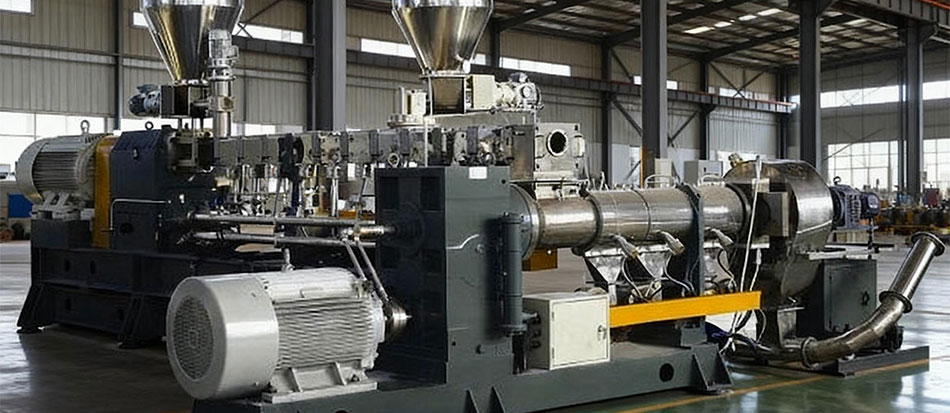
When you examine the output quality and foam characteristics, the difference between high pressure and low pressure foaming machines becomes starkly apparent. High pressure machines excel at producing foam with a very fine and uniform cell structure. This is because the two liquid components (polyol and isocyanate) are impingement-mixed at extremely high pressures, creating a turbulent, homogeneous blend before exiting the mixing head. For you, this translates to superior foam consistency, better physical properties like tensile strength and durability, and a smoother, more aesthetically pleasing surface finish on your final product.
In contrast, low pressure machines rely on a mechanical stirring action inside a mixing chamber. While effective, this method can sometimes lead to a slightly less homogeneous mix. You might notice a marginally coarser cell structure and potential for minor density variations within the foam bun. This doesn't mean the quality is poor; for many applications like basic insulation blocks or packaging foam, it is entirely adequate. However, if your project demands the highest possible structural integrity and visual perfection—such as in automotive interiors or high-end furniture—the output from a high pressure system is typically the preferred choice.
2.1、Cell Structure and Density Consistency
When you examine the foam produced by a high-pressure machine, you'll notice a remarkably uniform and fine cell structure. This is a direct result of the impingement mixing process, where the raw materials are forced together at extremely high pressures, creating a turbulent, intimate mix before exiting the nozzle. This method yields a foam with very consistent cell size and shape, leading to superior physical properties like higher tensile strength, better dimensional stability, and more predictable thermal insulation values.
In contrast, the cell structure from a low-pressure machine tends to be more irregular and open. Since mixing relies on a mechanical stirrer inside a static chamber, the blend is less violent and thorough. You might observe a wider variation in cell size and more interconnected, open cells. While this can be beneficial for applications requiring high air permeability or faster demolding, it generally results in lower overall density consistency and less predictable mechanical performance across a production batch.
Therefore, your choice here is critical. If your project demands a premium product with tight specifications for density, strength, or insulation performance—such as in refrigeration panels, high-end automotive interiors, or technical components—the high-pressure system's superior cell structure is non-negotiable. For applications where absolute consistency is less critical, or where a softer, more breathable foam is desired, the low-pressure output may be perfectly adequate and more cost-effective.
2.2、Mixing Ratio Accuracy and Final Product Integrity
When you examine the mixing ratio accuracy, high-pressure machines hold a distinct advantage. Their impingement mixing method relies on precisely controlled high-pressure streams of the polyol and isocyanate components colliding in a small chamber. This mechanical force ensures an almost instantaneous and thorough blend, independent of the components' viscosities. The result is a consistently accurate mixing ratio, which is the absolute cornerstone of final product integrity.
For your production, this translates to predictable and uniform foam properties in every batch. The cell structure is finer and more regular, the density distribution is even, and the physical properties—like tensile strength, elongation, and compression set—are superior and repeatable. If your application demands high-performance foam for automotive interiors, premium mattresses, or technical insulation where specifications are tight, the precision of a high-pressure system is non-negotiable.
In contrast, low-pressure foaming machines use a mechanical stirring method. While modern low-pressure units have improved with better metering pumps and controls, the stirring action can struggle to achieve the same level of homogenization, especially with formulations that have differing viscosities or fast reaction profiles. There's a higher statistical chance of minor ratio fluctuations.
This inherent characteristic means that for applications where absolute top-tier foam integrity is less critical, or where cost constraints are paramount, a well-tuned low-pressure machine can be perfectly adequate. Think of products like simple packaging fillers or lower-specification cushioning. However, you must be vigilant about potential inconsistencies, such as slightly coarser cell structure or minor variations in density, which could affect the product's long-term performance or appearance in more demanding uses.
2.3、Suitability for Different Applications
When you're selecting between high-pressure and low-pressure foaming machines, the suitability for your specific application is paramount. High-pressure machines excel in applications demanding superior foam quality, structural integrity, and fine cell structure. They are the preferred choice for manufacturing high-end products like automotive interior parts (seats, dashboards, headliners), high-comfort mattresses, and technical insulation panels where consistent density and excellent physical properties are non-negotiable.
Conversely, low-pressure machines are highly suitable for applications where cost-effectiveness and simpler operation are prioritized over ultimate foam perfection. They are ideal for producing large, less structurally demanding items such as packaging foam blocks, basic carpet underlay, and some types of cavity-fill insulation. If your project involves lower volumes, prototyping, or products where slight variations in foam texture are acceptable, a low-pressure system can be a practical and economical solution.
Your decision should align with your end-product requirements. For instance, if you are in the automotive supply chain, a high-pressure machine is almost certainly required to meet OEM specifications. If you are starting a business producing simple cushioning materials, a low-pressure machine might offer the perfect balance of performance and investment, allowing you to scale up gradually.
3、Operational and Economic Considerations
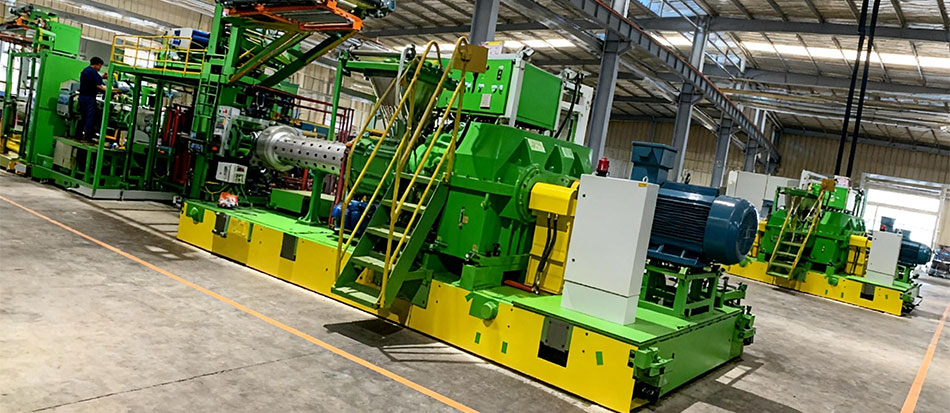
When you evaluate the operational and economic aspects, the differences become stark and directly impact your bottom line. High-pressure machines demand a higher initial investment, not just for the sophisticated high-pressure pump and self-cleaning mixing head, but also for robust hydraulic systems and precise controls. Their operational costs, however, can be favorable for large-scale, continuous production due to superior material efficiency and minimal waste from the self-cleaning process. In contrast, low-pressure machines are significantly more affordable upfront and simpler to maintain, making them accessible for startups or smaller operations. Yet, you must account for the recurring cost of solvent for cleaning the mixing chamber and the potential for slightly higher material waste. Your choice hinges on your production volume: high pressure offers lower per-unit cost at high output, while low pressure provides flexibility and lower capital risk for varied, smaller batches.
3.1、Initial Investment and Maintenance Costs
When evaluating the initial investment, high-pressure foaming machines typically require a larger capital outlay than their low-pressure counterparts. This is primarily due to their more complex design, which includes high-precision metering units, sophisticated mixing heads, and advanced control systems. You are paying for the superior mixing technology and the ability to handle a wider range of materials with greater precision. For a startup or a project with a tight budget, this upfront cost can be a significant consideration.
Conversely, low-pressure machines present a lower barrier to entry. Their simpler mechanical design, often using a gear pump for material circulation and a basic mechanical stirrer in the mixing chamber, translates to a more affordable purchase price. This makes them an attractive option for smaller-scale operations, prototype development, or applications where the highest possible foam quality is not the absolute priority. Your initial cash flow is less impacted.
However, the cost analysis doesn't end with the purchase price. Maintenance costs over the machine's lifespan tell a different story. High-pressure machines, while expensive upfront, are designed for durability and continuous, high-volume production. Their self-cleaning mixing heads minimize material waste and reduce downtime for cleaning. Although spare parts like the mixing head nozzle may be costly, the intervals between maintenance are generally longer, leading to potentially lower long-term operational disruption costs for high-throughput environments.
Low-pressure machines, while cheaper to buy, often incur higher ongoing maintenance costs. The mechanical stirrer and mixing chamber require frequent and thorough cleaning after each shot or at short intervals to prevent material curing and clogging. This cleaning process consumes solvent, labor time, and creates downtime. Furthermore, components like stirrers and seals may wear out more quickly under abrasive material flows, leading to more frequent replacements. Your operational efficiency can be affected by these recurring maintenance cycles.
Therefore, your choice hinges on a total cost of ownership perspective. If your project demands high output, consistent top-tier quality, and minimal downtime, the higher initial investment in a high-pressure system is often justified by lower long-term maintenance and material waste costs. If your production runs are shorter, batch-oriented, or more cost-sensitive at the outset, a low-pressure machine's lower initial cost might be suitable, but you must budget diligently for its higher operational and maintenance demands.
3.2、Production Speed and Efficiency
When you evaluate production speed, high-pressure machines are the clear frontrunners. Their impingement mixing head operates at extremely high pressures, allowing for instantaneous and thorough mixing of the A and B components. This enables very short shot cycles and rapid injection, making them ideal for high-volume, continuous production lines where cycle time is critical. You can achieve a consistent, high-quality foam output at a significantly faster rate compared to low-pressure systems.
In contrast, low-pressure foaming machines rely on a mechanical stirring action within a mixing chamber. This process is inherently slower. The mixing head requires a purge cycle between shots to clean the chamber, which adds to the overall cycle time. For your operations, this means that while low-pressure machines are perfectly capable, their production throughput is lower. They are better suited for batch production, prototyping, or applications where the production speed is not the primary constraint.
Efficiency must also be considered in terms of material usage and waste. High-pressure systems excel here as well. The precise, high-velocity mixing and clean-cut shot control result in minimal material waste. There's no need for a solvent purge, reducing both material loss and VOC emissions. For your project's bottom line, this translates to higher material efficiency and lower operational costs per unit over time, despite the higher initial machine investment.
Low-pressure machines, while simpler, can be less efficient with material. The mechanical mixing can sometimes be less homogeneous if not properly maintained, potentially leading to off-spec product. The required solvent purge between cycles also consumes material and generates waste that must be managed. Therefore, your efficiency calculation for a low-pressure system must account for these ongoing consumable costs and potential yield variations.
3.3、Material Wastage and Clean-Up Process
When you operate a high-pressure foaming machine, material wastage is typically minimal. The impingement mixing head ensures that nearly all material is injected into the mold, with only a tiny amount purged during the cleaning cycle. This precision directly translates to lower raw material costs for your project, especially in high-volume production runs.
In contrast, low-pressure machines inherently generate more waste. The continuous recirculation of material through the mix head leads to a gradual buildup and curing of residual foam inside the chamber. To maintain mixing quality, you must periodically purge this material, resulting in a consistent stream of waste that adds to your operational expenses over time.
The clean-up process also differs significantly. For high-pressure systems, cleaning is often automated and efficient. The self-cleaning mix head uses high-pressure solvent or air to purge residues, a quick process that minimizes downtime. You can switch between materials or colors with relative ease, enhancing production flexibility.
Cleaning a low-pressure machine is generally more labor-intensive and time-consuming. You need to manually disassemble the mix head to remove cured material, which increases non-productive time and requires more operator intervention. This not only affects your production schedule but also adds to labor costs.
Therefore, your choice impacts both your material budget and operational workflow. If minimizing waste and streamlining clean-up are priorities for your efficiency and cost-control goals, a high-pressure system offers clear advantages. For smaller-scale or less frequent production where absolute material efficiency is less critical, the lower initial investment of a low-pressure machine might still be justifiable.
4、Choosing the Right Machine for Your Needs
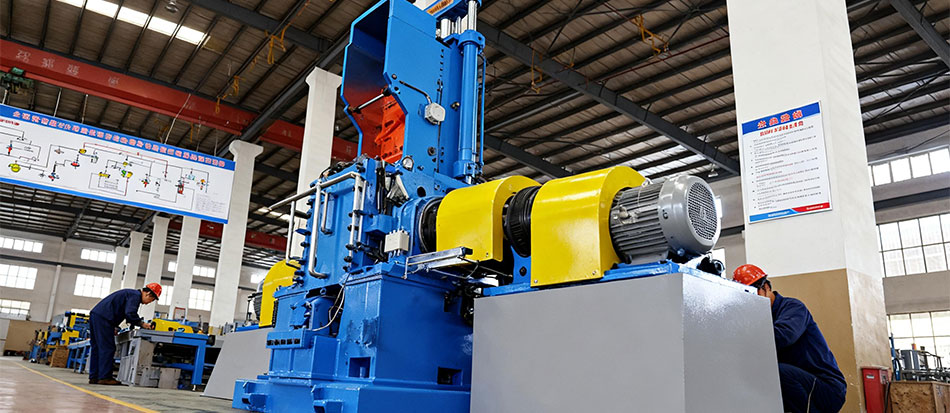
Now that you understand the key differences between high-pressure and low-pressure foaming machines, the next step is choosing the right one for your needs. Your decision should be guided by your specific project requirements, production scale, and quality expectations. If you prioritize superior foam quality with a fine, uniform cell structure for high-end applications like medical equipment or automotive interiors, a high-pressure machine is likely the better investment despite its higher initial cost.
Conversely, if your primary focus is cost-effectiveness for larger volume production of items where absolute foam perfection is less critical, such as certain types of insulation or packaging, a low-pressure system offers significant advantages. You must also honestly assess your operational capabilities; high-pressure machines demand more skilled maintenance, while low-pressure systems are generally simpler for your team to handle. Ultimately, aligning the machine's core strengths with your product's most important characteristics will lead you to the optimal choice for efficiency and profitability.
4.1、When to Choose a High-Pressure Foaming Machine
You should choose a high-pressure foaming machine when your primary goal is achieving the highest possible product quality and consistency. The impingement mixing technology ensures a near-perfect, homogeneous blend of the polyol and isocyanate components. This results in foam with superior cell structure, uniform density distribution, and optimal physical properties, which is critical for demanding applications.
Consider this technology if you are manufacturing products where performance and aesthetics are non-negotiable. Examples include high-end automotive interior parts, premium furniture cushioning, intricate architectural panels, and technical insulation where thermal efficiency directly correlates with foam uniformity. The precision of high-pressure mixing minimizes defects like voids or soft spots.
Another key scenario is when you have high-volume production runs. High-pressure machines are designed for continuous, efficient operation. Their faster reaction times and ability to handle complex multi-component formulations allow for shorter cycle times, maximizing output and providing a better return on investment for large-scale projects.
Finally, opt for a high-pressure system if you require flexibility in processing different material types or formulations. These machines offer precise control over shot size, pressure, and ratio, making them adaptable for various polyurethane systems, from flexible to rigid foams, and even for non-foam applications like elastomers and coatings.
4.2、When a Low-Pressure Machine is the Ideal Fit
Low-pressure foaming machines are the ideal fit when your production demands prioritize flexibility, lower initial investment, and simpler operation over ultra-high throughput and the absolute finest cell structure. If you are a smaller manufacturer, a workshop handling custom or varied jobs, or just starting in polyurethane foam production, this system often aligns perfectly with your operational and financial realities.
You should consider a low-pressure machine if your projects involve frequent material or color changes. The self-cleaning mix head and the recirculation of material back to the tanks between shots make switching formulas remarkably fast and efficient, minimizing waste and downtime. This is invaluable for producing a diverse range of products without cross-contamination.
This technology is exceptionally well-suited for applications where extreme structural strength or the most uniform, fine-cell foam is not the primary requirement. It excels in producing flexible foams for furniture cushioning, mattresses, packaging, and some types of insulation panels. The foam quality is entirely suitable for a vast majority of commercial and industrial uses.
Furthermore, if your budget is constrained, the lower capital cost of a low-pressure machine presents a significant advantage. The operational simplicity also means you may require less specialized training for your staff, and maintenance tends to be more straightforward and less costly compared to its high-pressure counterpart, keeping your long-term operational expenses in check.
4.3、Key Questions to Ask Before You Decide
Before committing to a high-pressure or low-pressure foaming machine, you must ask yourself a series of critical questions. Start by defining your primary application: Is it for continuous panels, complex molds, or simple cavity filling? High-pressure machines excel in applications demanding superior foam quality and fine cell structure, such as refrigeration or high-end automotive interiors. Low-pressure systems are often sufficient for less demanding tasks like packaging or basic insulation blocks.
Next, evaluate your production volume and required output rate. High-pressure machines typically offer faster reaction and cycle times, making them suitable for high-volume, continuous production lines. If your operation is batch-oriented or has lower daily output needs, a low-pressure machine might be a more cost-effective solution without sacrificing your core requirements.
Consider your budget not just for the initial purchase but for total cost of ownership. High-pressure systems have a higher upfront cost and may require more specialized maintenance. Ask about the availability of spare parts, technical support, and the expected lifespan of key components like the mixing head. For low-pressure machines, factor in the ongoing cost of solvent flushing and potential material waste.
Finally, assess your technical expertise and facility capabilities. High-pressure technology requires more skilled operators and stricter control over material temperature and pressure. Do you have the personnel and infrastructure to support it? A low-pressure system is generally simpler to operate and maintain, which can be a decisive advantage for smaller teams or facilities with limited technical resources.
Now that you understand the key Difference Between High Pressure and Low Pressure Foaming Machines, you're equipped to evaluate which system aligns with your production scale, quality requirements, and financial plan. Remember, there's no universally "best" machine—only the best one for your specific project parameters.
We encourage you to assess your primary needs: Is it superior foam consistency and high-volume output, or is it lower initial investment and simplicity of operation? Your answers will naturally point you toward either high-pressure precision or low-pressure flexibility.
Armed with this knowledge, you can confidently consult with equipment suppliers and make a choice that optimizes your workflow and product quality. The right foaming machine is a crucial investment in the success and growth of your manufacturing operations.